
Why Recovery Is the Missing Link in Modern Exercise

Why Understanding the “Fix Me So I Can Carry On” Mindset
Walk into any gym, golf club, Pilates class, or padel court and you’ll see something encouraging.
More people are moving. Training. Taking their health seriously.
And that’s a good thing.
But there’s a pattern I see regularly in the clinic that doesn’t always get talked about.
Many people are putting in the effort — showing up, staying consistent, doing all the right things on the surface — yet their body still feels tight, sore, or just not quite right.
It can be frustrating.
Because from their point of view, they’re doing exactly what they’re supposed to be doing.
So when something starts to niggle, the natural thought is:
“Maybe I just need a bit of treatment to keep things going.”
And to a degree, that makes sense.
But in many cases, the issue isn’t a lack of effort…It’s that one key piece of the puzzle being quietly overlooked.

Finding Exercise Later in Life
Many of the people I treat didn’t follow a traditional sporting path growing up.
They weren’t necessarily taught things like:
How to warm up properly
How to build strength gradually
How to recognise fatigue
How to balance training with recovery
Instead, exercise became part of life later on.
In their 30s, 40s, 50s and beyond, they discovered:
Golf
Padel
Pilates
Gym classes
Running clubs
And they threw themselves into it — which is genuinely a positive step.
But it does come with one small challenge.
Putting in the Effort… But Missing the Structure
What’s often missing isn’t motivation.
It’s understanding.
Because when you skip the early years of physical development, you also miss:
How to progress load safely
How to recognise early warning signs
How to balance effort with recovery
So what tends to happen?
People end up doing:
Too much
Too often
With too little recovery
And eventually, the body starts to push back.
“Can You Just Fix It So I Can Keep Going?”
This is something I hear in one form or another almost daily.
A client comes in with:
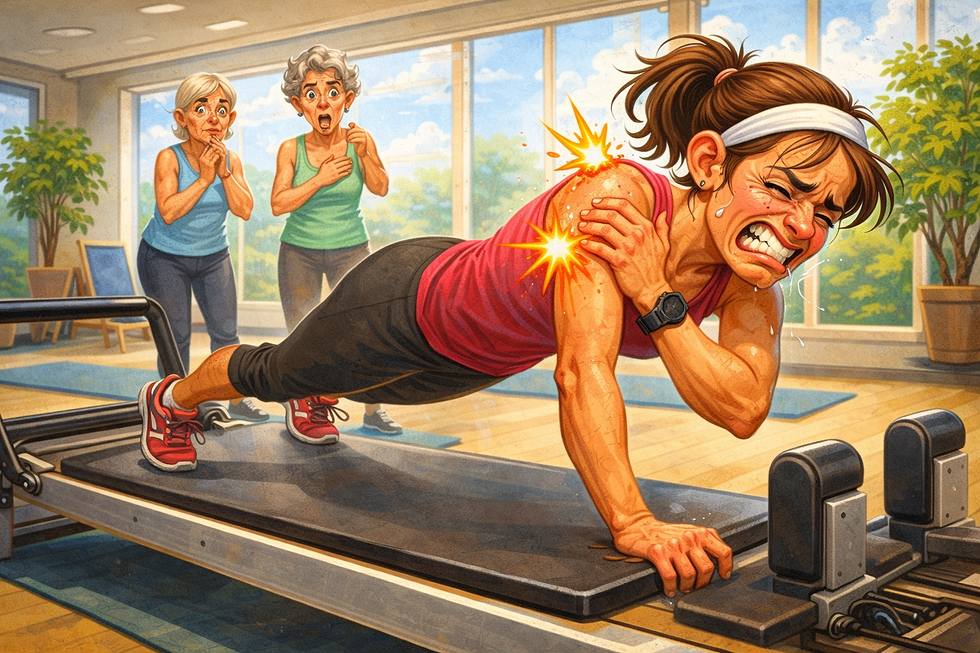
Shoulder pain
Lower back tightness
Hip or knee irritation
And underlying it all is the same idea:
“Can you sort this so I can carry on doing what I’m doing?”
Now, that’s completely understandable.
No one wants to stop doing something they enjoy.
But here’s what’s often happening underneath the surface:
Your body isn’t breaking down randomly — it’s responding to how it’s being used.
Recovery Isn’t Optional — It’s Where Progress Happens
This is one of the biggest misunderstandings I see.
Most people think:
Training = improvement
Rest = doing nothing
In reality, it works like this:
Training creates stress
Recovery allows adaptation
Adaptation leads to improvement
Skip recovery, and you interrupt that process.
Most injuries I see aren’t caused by doing nothing — they’re caused by doing too much, too often, without enough recovery.
What Happens When You Don’t Recover Properly

Without adequate recovery, the body starts to compensate:
Muscles stay in a constant state of tension
Joints lose efficiency
Movement patterns become altered
Load shifts to areas that aren’t designed to handle it
Over time, this can lead to:
Persistent tightness
Recurrent niggles
Reduced performance
Injury
And eventually, it brings people into the clinic.
The Trap of “Doing More”
When something feels tight or uncomfortable, the natural instinct is often to:
Stretch it more
Train harder
Push through it
But in many cases, the issue isn’t a lack of effort.
It’s a lack of recovery capacity.
You may simply be asking more from your body than it’s had time to adapt to.
Why Treatment Alone Isn’t the Answer
Treatment has its place.
It can:
Reduce pain
Improve movement
Reset muscle tone
But if nothing else changes, the same pattern tends to return.
Treatment becomes a temporary reset, rather than a long-term solution.
What Actually Works (And It’s Often Overlooked)
If you want to keep doing the activities you enjoy long-term, the focus needs to shift slightly.
Not away from activity — but towards balance.
What really makes the difference:
Strength work builds resilience
Mobility supports movement quality
Recovery time allows adaptation
Load management prevents overload
It’s not the most exciting part of training.
But it’s the part that keeps you going.
A Slight Mindset Shift
Instead of thinking:
“How do I keep going without stopping?”
Try this:
“How do I train in a way that my body can actually keep up with?”
Because the goal isn’t just to stay active this month.
It’s to stay active:
Next year
In five years
In ten years
Where I Fit In
My role isn’t just to treat symptoms.
It’s to:
Help you understand what’s going on
Reduce pain when it appears
Guide you towards better movement patterns
Support you in staying active in a sustainable way
Sometimes that includes hands-on treatment.
Sometimes it includes advice that’s about doing a little less, not more.
Final Thought
If you’ve found exercise later in life, you’re already doing something positive.
That’s a strong step in the right direction.
But if your body keeps complaining, it’s not being difficult.
It’s giving you useful feedback.
And often, that feedback is simply this:
“I’m happy to do this…just not this much, this often, without a break.”
Ready to Train Smarter, Not Just Harder?
If you’re dealing with recurring tightness, pain, or injuries that don’t seem to settle, it may be time to look beyond just treatment.
Book a session at Myotherapy Clinic in Horsham and we’ll look at what your body actually needs — not just where it hurts.
In “What Happens When You Don’t Recover Properly”
This is often where more persistent issues begin to develop, such as ongoing lower back discomfort linked to pelvic imbalance.
In “Recovery Isn’t Optional”
In some cases, this cycle can contribute to more complex conditions such as frozen shoulder, where movement becomes increasingly limited.


Comments